
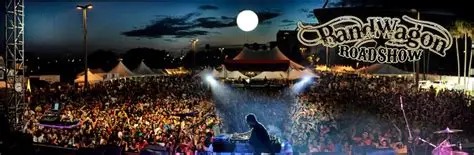
There is a particular kind of tired that comes at four in the morning when the trucks are loaded and the field is empty again, and the only people still standing are the ones who never appear in a photograph. Ten runs of the Bandwagon Roadshow were built by those people. The stagehands who learn a plot once and then make it happen in a city they have never worked in. The local crews who show up not knowing our system and leave knowing it better than some who travel. The suppliers who answer a phone at an unreasonable hour because they understand what a load-in window actually means. The drivers who own the schedule more than any production manager ever will.
We talk about the Roadshow as our benchmark for scale, and that is fair, because it is: a touring festival built around music and cars, put on the road ten times. But scale is the least interesting thing about it. What matters is that the tenth run looked like the first one in the ways that count and better in the ways that do not. That only happens when a team carries the standard rather than the paperwork.
One more thing that made ten runs possible rather than ten lucky breaks: the Roadshow ran on the SL 320 staging system, the mobile stage we deploy when a field has no building around it. It is the difference between a show that depends on what a city happens to own and a show that arrives with its own stage, its own roof and its own standard, then leaves the ground as it found it. The SL 320 is set out here → and the SL320 gallery is here →
The Orlando kickoff, and what scale looks like
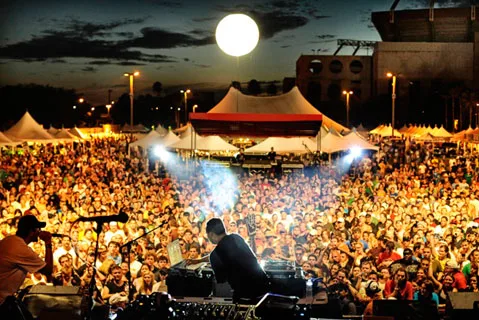
The Roadshow opened at Festival Field at the Florida Citrus Bowl in Orlando in September 2010, after roughly eighteen months of planning, with Snoop Dogg headlining and a bill that ran through Sublime with Rome and Reverend Horton Heat, alongside the car show and the vendor market. A car show, a concert and a market in one field is three productions sharing a load-in, and it is the reason the Roadshow is our reference point for scale rather than any single theatre date.
The press record of that opening weekend is public, and we would rather point at it than describe it. BizBash covered the launch on 8 September 2010 with the numbers that matter to a production: 5,500 through the gate at Festival Field, fifteen acts across two stages with Snoop Dogg headlining, the vintage and custom cars, vendors, strolling performers and artists’ compound filling the rest of a 175,000 square foot field, and an eight city national tour planned from the following April. A new Orlando internet radio station, radiobandwagon.com, carried the promotion, with WJRR-FM as media sponsor.
The same title put the Roadshow in its Best of 2010: new event launches listing that December, and the Orlando Sentinel feature is the other record of that weekend. Those photographs belong to the photographers and their titles, so we link to them rather than lifting them onto this page. Our own archive of the Roadshow is being digitised; when it is ready it goes here, credited.
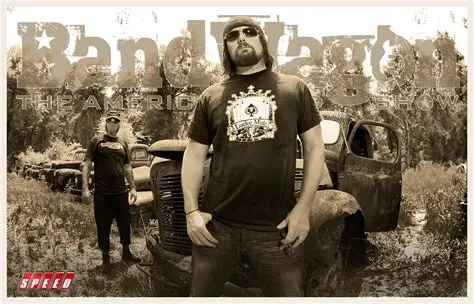
The Roadshow was also picked up by Speed TV, which is the detail that tells you what it actually was. A car-and-music festival that a motorsport network wanted is a festival built for people who came for the machines and stayed for the bands, not the other way around. Getting that right is a production question before it is a programming one: the field has to work for two audiences at once, and the show cannot get in the way of the thing everyone came to see.
Ten runs also teaches you what a good local crew is worth. Every city has people who can build a stage. Far fewer have people who will tell you, honestly and in time to do something about it, that the power is short, the gate is wrong, or the ground will not take a truck. We learned to look for that honesty and to pay for it, and the runs got smoother because of it. The touring crew set the tone, the local crew answered it, and somewhere in the middle the thing stopped being a job and started being a group of people who did not want to let each other down.
Why we name the team first
Whenever a venue or a partner asks what we have produced, the honest answer has two halves. There is the headline: the Sports Illustrated hospitality ship at the Sydney Olympics, festivals in Brazil, repeated Australian touring with Chingy, ten runs of the Roadshow, and now a forty-eight stop international run for Midnasty & Friends. And there is the half that actually explains the headline: the crews, suppliers and drivers who made each of those happen, most of whom will never have their name on a poster.
Stan Wright was Festival Director across the Roadshow years, and the credit he would give first is not his own. It belongs to the team that loaded in at dawn, held the line through the show, and packed it down again while the audience was still finding its cars. Ten times over.