Venues and promoters ask the same fair question of anyone asking for a date: what have you actually produced. This page is the answer in one place, so it can be read rather than taken on trust. Every line below is work our team produced, and every one of them can be verified with the people involved.
During the Sydney Olympic Games we produced the entertainment programme on the Sports Illustrated hospitality ship. That meant booking the acts, running the stage and holding the room together for international guests, night after night, on a vessel in the middle of the biggest event on earth at the time. Every act that played that ship was booked and run by Stan Wright, who served as Festival Director for the programme.
It is the clearest single example of what we do: a production inside somebody else's marquee event, delivered to their guests, without a second chance if it goes wrong.
The setting itself is a matter of public record. The City of Sydney Archives holds the Olympic Games Photograph Library for 2000, including Olympics cruise ships in Sydney Harbour, Sydney, 2000 (box CSA069775), which shows the harbour vessels used as Olympic hospitality venues that year. The photograph is the City of Sydney's, licensed CC BY-NC-ND 4.0, and is linked rather than reproduced here. It documents the ships, not our programme on them; the credit for the entertainment on the Sports Illustrated ship is ours to stand behind and to be checked with the people who were there.
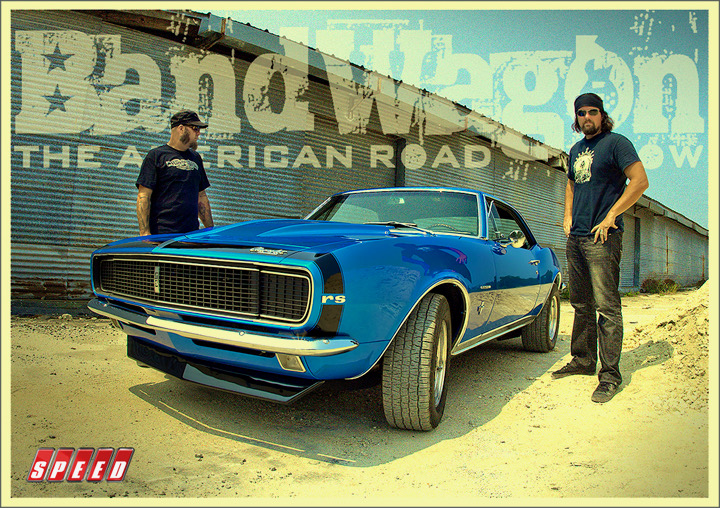
The Bandwagon Roadshow was a touring music and motorsport festival, built around America's twin passions for cars and live music, and we took it on the road ten times, with Stan Wright as Festival Director. The first run was 2001, and it was still on the road in 2012 under the Music, Cars, Culture banner. Target attendance was 10,000 a stop. That is the number we planned the site, the crew and the local supplier against, not a claim about turnout. It is our own benchmark for the scale of production we are comfortable carrying: a show that has to be rebuilt in a new city, with new local suppliers, and then be better than the last one.
Ten runs is not a lucky night. It is a system that works when the truck doors open somewhere unfamiliar. The Roadshow was also picked up by SPEED, the motorsport network, as Bandwagon: The American Road Show. The rig is the SL 320 mobile stage, and the runs went into NASCAR weekends, where a fan midway is already saturated with noise.
Read the article: Ten times out, and the team that made it happen →
For McKesson Corporation we delivered a corporate buyout in a private function space at the Sydney Harbour Bridge, looking out over Sydney Harbour, with heavy local entertainment carrying the night. A buyout is a different discipline from a ticketed show: the venue is yours for the evening, the audience is one company, and the entertainment has to work for people who are in the room as guests rather than as a crowd.
We also worked through buyouts across Sydney venues for that programme, comparing what each space gave the event against what it cost, which is the comparison that decides whether an evening like this lands or merely happens.
Dublin was the other half of that relationship. For McKesson Corporation we delivered a programme in the city with live music built around it, and both the Black Eyed Peas and Bono performed as part of it. It was not only inside venues either. There were public activations in the city as well, the kind that meet people where they already are rather than behind a door, and our group went through them together. Concerts spread across a city rather than contained in one room are a harder production problem than a single buyout: separate buildings, separate house teams and separate local suppliers, with one company's guests moving between them and the standard having to hold at every stop.
We have produced festivals in Brazil, working with Fresh Harvest 365 on the ground, with Stan Wright as Festival Director. Large-crowd festival delivery in a second language and a second regulatory environment teaches a producer things that a domestic tour never will.
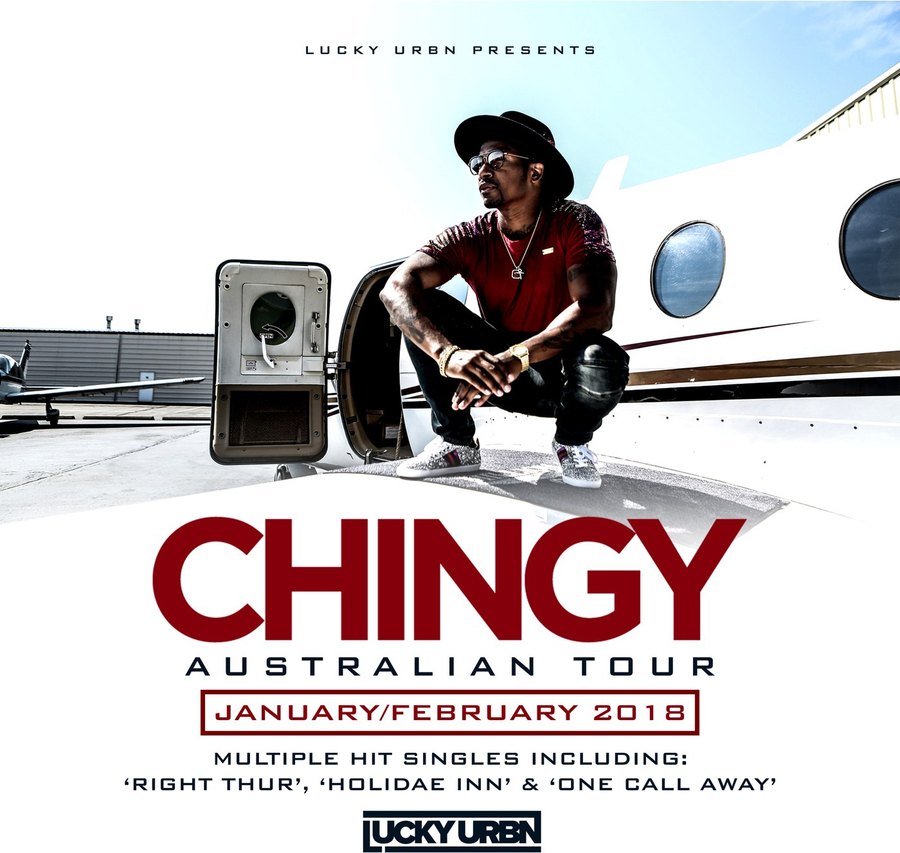
Stan Wright has taken the platinum recording artist Chingy to Australia on multiple tours. Repeated touring into the same country is its own credential: it means working Australian venues, Australian promoters, Australian crews and Australian suppliers more than once, and being invited back.
The run below is one of those returns: the January and February 2018 Australian tour, billed on Chingy's hit singles, Right Thurr, Holidae Inn and One Call Away. It came after earlier Australian dates, which is the point. A promoter does not book the same artist back into the same country twice on hope.
Our present work is a forty-eight stop international run for Midnasty & Friends, the Bisaya hip hop act founded in Dumaguete in 2001: thirty stops in the Philippines, five in Australia, five in Canada and eight in the United States.
The run is produced as one standard repeated forty-eight times, rather than forty-eight different shows, and it carries a Pinoy Pride community programme in the diaspora cities, organised city by city with Filipino community organisations rather than sold at the general market and hoped for.
Watch Midnasty → the act’s own YouTube channel, where the catalogue sits.
This is a new collective between Doing It Wright Festivals and H4H Experience. The experience behind it is not new, and this page exists so nobody has to take that on faith.
Where a venue or promoter asks for references, we give the contacts directly and tell the person we have named that the call is coming, so the conversation is honest on both sides rather than a number handed out cold.
We would rather be checked than believed.
